Void Fill: Stop Your Products Moving in Transit
Void fill is the material you pack into the empty space between your product and the box walls. Its job is simple: prevent the product from shifting during transit. A product that moves inside its box will eventually hit something hard enough to cause damage, no matter how well you have wrapped it.
We use a straightforward rule of thumb when advising customers: your product should not be able to move more than 5mm in any direction once the box is sealed. If you can shake the parcel and feel the contents shift, you need more void fill.
Types of Void Fill
Loose Fill Packing Peanuts
The classic option. Loose fill peanuts flow around irregular shapes and fill awkward gaps that other materials struggle with. They are lightweight, so they add almost nothing to your shipping costs. Traditional polystyrene peanuts are being phased out by many businesses in favour of biodegradable starch-based alternatives, which dissolve in water and break down in compost. We stock both types, but we actively recommend the biodegradable version to all our customers.
The downside of peanuts is mess. Customers opening a box full of loose fill will get peanuts on their floor, their sofa, and their carpet. For e-commerce brands where unboxing experience matters, this can work against you.
Paper Crinkle (Shredded Kraft Paper)
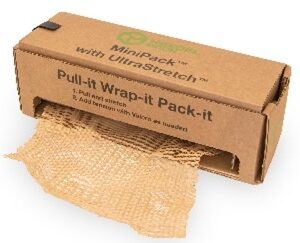
Crinkled kraft paper strips are the most popular void fill we sell to e-commerce businesses. They look good, they are 100% recyclable, and they provide decent cushioning. The crinkle shape means the paper interlocks and stays in place rather than settling to the bottom of the box during transit.
Paper crinkle works best for light to medium-weight products. For items over about 3kg, it compresses too easily and the product can settle through it during a bumpy journey. In those cases, you need something firmer.
Tissue Paper
Tissue paper is more of a presentation material than a structural void fill, but it does a good job of filling small gaps and preventing surface-to-surface contact. We see it used a lot in gift packaging, cosmetics, and fashion e-commerce, usually scrunched loosely around the product. It adds a premium feel to the unboxing experience without adding cost.
Air Pillows
Inflated plastic cushions that are extremely light and fill large voids quickly. Air pillows are the go-to choice for high-volume fulfilment operations where speed matters. They require a machine to inflate them (we supply the pillows on rolls, ready for your inflator), which means there is a setup cost. But if you are packing more than 50 orders a day, the time savings pay for the equipment within a few months.
Air pillows provide good cushioning against impact but can pop under heavy compression. They are best suited to light and medium-weight products.
Corrugated Shred
Shredded corrugated cardboard is the toughest paper-based void fill available. The fluted structure of the shredded pieces gives them real spring and resistance to compression. We recommend corrugated shred for heavier products where paper crinkle would flatten out. It is fully recyclable and made from recycled material.
Biodegradable vs Plastic Options
Here is an honest comparison:
| Material |
Recyclable |
Biodegradable |
Relative Cost |
Best For |
| Polystyrene peanuts |
Limited |
No |
Low |
Irregular shapes, budget packing |
| Starch-based peanuts |
Yes (compostable) |
Yes |
Medium |
Same as above, eco-conscious brands |
| Paper crinkle |
Yes (kerbside) |
Yes |
Medium |
E-commerce, gift boxes, presentation |
| Tissue paper |
Yes (kerbside) |
Yes |
Medium-High |
Premium brands, small gaps, surface protection |
| Air pillows (plastic) |
Check locally |
No |
Low per unit |
High-volume fulfilment, large voids |
| Corrugated shred |
Yes (kerbside) |
Yes |
Medium |
Heavy products, firm support needed |
The paper-based options cost 10-20% more than their plastic equivalents in most cases. For many of our customers, especially those selling direct to consumers, that premium is worth it. Your packaging is part of your brand, and a box full of polystyrene chips sends a very different message to one lined with kraft paper crinkle. See our eco-friendly packaging page for the full range of sustainable options.
How Much Void Fill Do You Need?
This depends on the gap between your product and the box. Ideally, you want the smallest box that still leaves enough room for protective wrapping and void fill. A box that is vastly oversized for the product inside will need far more fill material, costing you more per parcel and increasing your environmental impact.
As a rough guide:
- 10-20mm gap on each side: tissue paper or thin paper crinkle layer is enough.
- 20-50mm gap: paper crinkle, loose fill peanuts, or air pillows.
- 50mm+ gap: consider whether you are using the right size box. If the gap is unavoidable, use firmer materials like corrugated shred or scrunched kraft paper.
If you regularly have large voids to fill, it is almost always cheaper to switch to a smaller cardboard box than to keep filling the extra space with materials.
Matching Void Fill to Product Type
- Fragile items (glass, ceramics) - use void fill alongside protective packaging like bubble wrap. The void fill holds the wrapped item in place; it is not a substitute for cushioning.
- Clothing and soft goods - tissue paper for presentation, light crinkle to prevent the box collapsing inward.
- Heavy items (tools, machine parts) - corrugated shred or tightly scrunched kraft paper. Loose fill peanuts will compress under the weight.
- Food and drink - paper-based void fill only. Avoid loose fill peanuts near food products even if they are starch-based.
- Multi-item orders - fill between each item as well as around the outside. Items banging against each other cause just as much damage as hitting the box wall.
Browse our void fill range above, or explore the wider packaging accessories category. Not sure which type suits your products? Contact our team and we will point you in the right direction.